Cranks, locks, balances
Window hardware and seal repairs
When a window stops opening, closing or locking properly, the glass and frame are often fine. What wore out is usually small: a crank operator, a lock, a balance or weatherstripping, and many 1990s and 2000s Brampton homes are at that age. We connect you with an independent local pro who finds the right part and fits it. For other problems, see all window services.
- The worn part, not the whole window
- Casements, sliders and hung windows
- Tidy work in lived-in rooms
Symptom to part
Match the symptom to the part
These are the usual culprits behind each symptom.
Crank spins but the window doesn't move
Stripped gears in the operator, or a handle worn smooth. A new operator or handle fixes it.
Won't close tight
A bent operator arm, a worn hinge or a sagging sash. Drafts and whistling on windy days are the clue.
Lock won't catch
The lock and keeper have drifted apart, or the lock is worn. An adjustment or a new lock.
Sash drops or won't stay up
Balances hidden in the side tracks of a hung window hold the sash up. When one fails, the sash slides down.
Screen keeps jumping the track
Usually a bent frame or missing clips: a screen repair for the same visit.
Crank windows
Casement operators and hinges
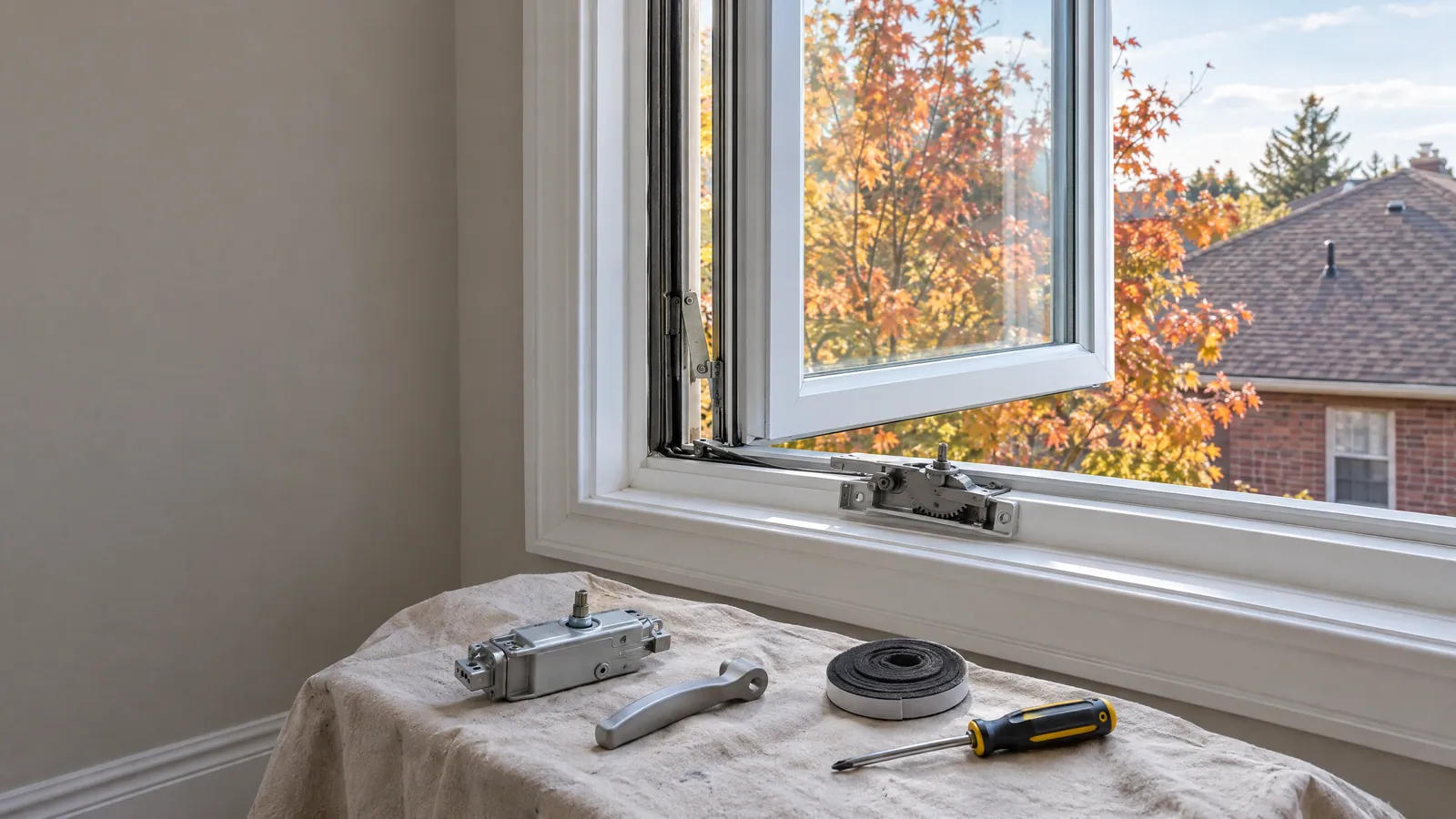
A casement's crank turns a small gearbox, the operator, which pushes an arm that swings the sash. Forcing a frozen or stuck window is the usual way the gears strip. Hinges along the top and bottom carry the sash, and when they wear, it sags and catches the frame.
More on our casement windows page.
Sliders and hung windows
Slider and single-hung balances, rollers and latches
Sliding and hung windows have their own moving parts, each replaceable on its own.
Balances
Springs in the side jambs hold a hung sash at any height. A pro matches the type and swaps them.
Rollers
Worn wheels under a sliding sash make it drag or stick open. New rollers fix it.
Latches and locks
A slider that won't lock often has a latch that no longer meets its keeper. An adjustment or new latch lines them up.
Before and after
A snapped crank handle, replaced on its own
One broken handle doesn't mean a new window.
More on casement windowsDrafts and leaks
Weatherstripping and exterior caulking after freeze-thaw winters
Winters here cross freezing on many days, and every swing works at the seals around a window.
Inside, weatherstripping flattens, tears or shrinks. New strips are cut to fit, and on casements the job pairs well with a new operator.
Outside, caulking where the frame meets the brick cracks and pulls away. A pro runs a new bead and checks that a slider's drain holes are clear.
What affects the quote
What goes into a repair quote
Repairs are priced by the part and the time. These change it:
- Which part, and whether it's still made or needs a close match
- How many windows need the same fix
- Window type: casement, awning, slider or hung
- Access: upper floors, stairwells, basements
A photo of the part and any frame label helps the pro source it first.
Children at home
Child safety and window locks
Opening-control devices limit how far a sash opens, and many release with a quick press by an adult. A pro can fit them and check that existing locks hold.
A bedroom window may also be a way out in an emergency, so avoid devices that need a key.
Basement windows
Stiff or painted-shut basement windows
In a basement bedroom or unit, an unused window can seize with paint or grit. A pro can free it and check that it opens fully and stays open, which matters most where someone sleeps.
If it's too small to be a way out, see basement windows.
Beyond parts
When hardware is no longer the fix
A new part won't help if the frame is failing, with cracked corners, a sash that won't sit square or a rotting sill, or if the parts are no longer made.
The pro should say so plainly. Fog between the panes can still be fixed on its own, and when frames are going, price replacement windows too.
Questions
Window repair questions
Explore your options
Related window repairs
Pros fix window hardware across Brampton, including Springdale, Professor's Lake, Castlemore, Mount Pleasant and Heart Lake.
Photograph the crank or lock and send it over
We'll pass it to a local pro who sources the part, arrives when agreed, works tidily and explains the fix to whoever is home.