Repair or replace
Fix the glass or replace the window? A decision guide for Brampton houses
In most Brampton houses the frame is younger and sounder than people expect, and the trouble is one worn part: a crank, a roller, a lock, or a sealed unit gone foggy between the panes. Fix that part, or fit new glass into the frame you already have. Replace the window when the frame has failed, when most of the glass is going at once, or when the opening itself has to change. The pro who looks at it confirms which case you're in.
First, check the offer, not the window
If this started with a call or a knock about a window "program", deal with that first. We're a free referral service, not a government program, and we don't knock on doors. We pass your request to an independent local glass professional, who comes out, quotes and carries out the job. Ontario's door-to-door ban doesn't cover windows or doors, but if you sign at home you generally have ten days to cancel (Ontario consumer page).
The one question that settles most cases
Is the frame still sound? If it is, you're choosing between repairs. If it isn't, you're choosing a new window.
Brampton's housing is young: most homes went up after 1980, and only a small share predates the 1960s. In a house from the 1980s, 1990s or 2000s, the frame often still sits true and sheds water, and the trouble is in the parts that move or in the glass. So work in that order: the part, then the glass, then the frame.
- Press on the sill and lower corners. Wood should feel hard; vinyl shouldn't be split or sagging.
- Look for water stains on the wall or trim below the window after rain.
- Close and lock the sash. It should meet the frame evenly all the way round.
Hardware and weatherstripping: the parts that wear first
In a full house, a window opened all day wears its moving parts sooner:
- The crank on a casement strips or slips. The operator is a separate part, and a pro can swap it.
- A slider that won't lock often has a worn latch or a sash that has sagged out of line.
- A screen that keeps jumping the track is often down to worn rollers or a bent screen frame.
- Flattened weatherstripping lets drafts in around the sash. New stripping is a small job.
None of these is a reason to replace a window whose frame and glass are fine. Window repair covers hardware jobs in more detail.
Glass-only fixes: broken panes and foggy sealed units
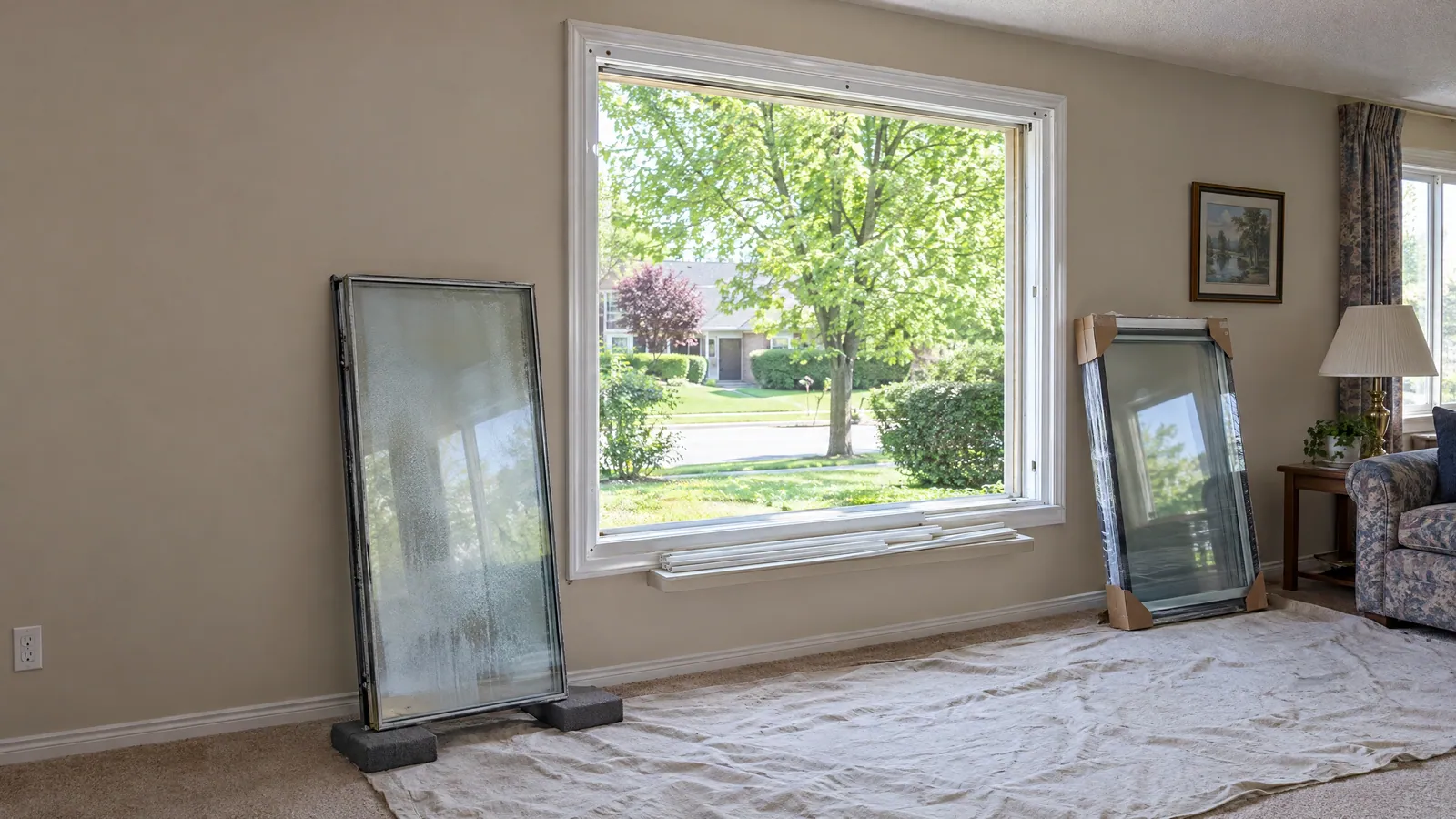
A double- or triple-pane window holds its glass in one factory-sealed piece. When the edge seal fails, moist air gets in, and you see fog between the panes that you can't wipe away. The fix is a new sealed unit: the pro orders one to your glass size and fits it into the frame and sash you already have, leaving trim and hardware alone.
Defogging is also offered: the unit is drilled, dried out and plugged. It changes how the glass looks, while a replacement unit swaps out the failed seal entirely. Ask the pro which suits your window.
A cracked pane follows the same logic: new glass, same frame. Broken window glass covers what to do first, and foggy sealed units sets the options side by side. Before booking, check the fog is really inside. If a cloth clears it from the room side, it's moisture from the house, common on cold, humid winter mornings.
When replacement is the better answer
The frame is soft, split or twisted
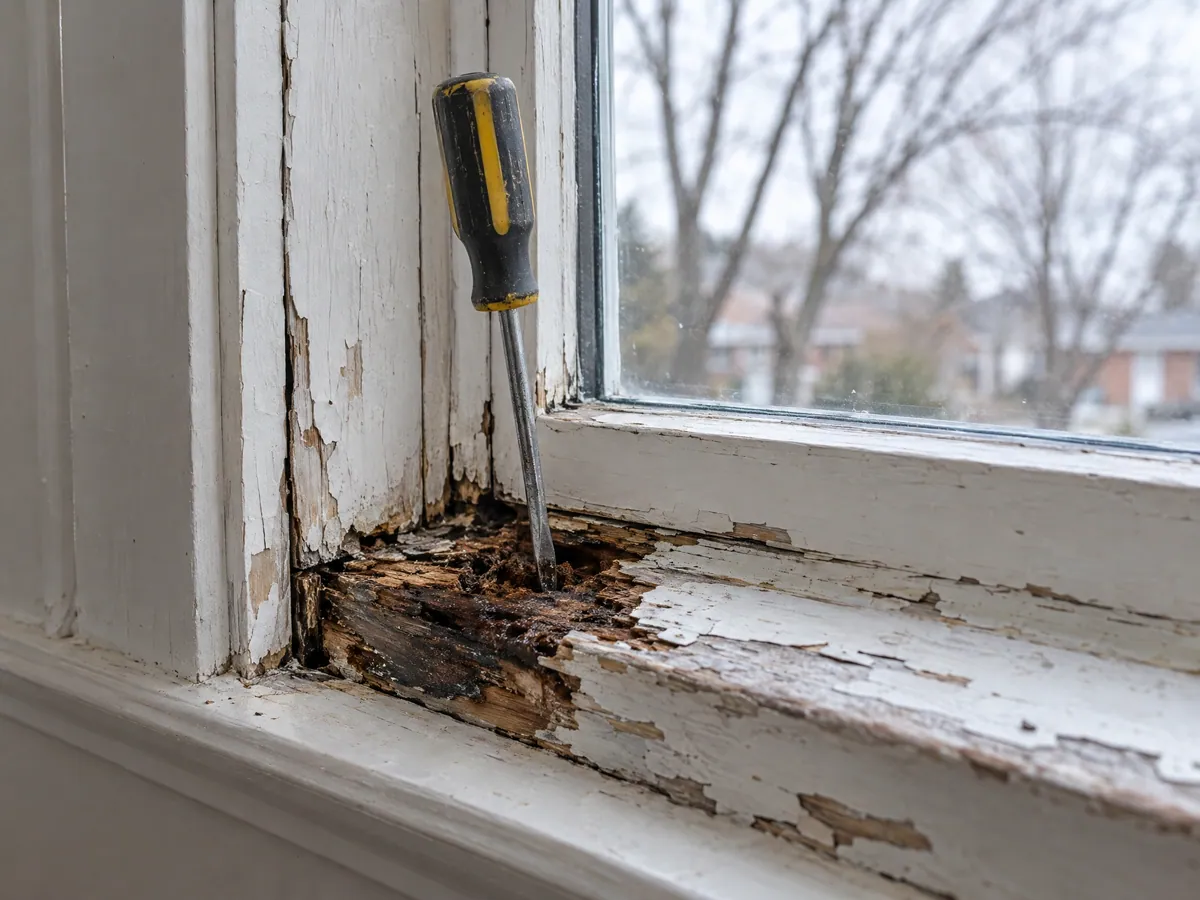
If a screwdriver pushes easily into the sill corner, or the frame has twisted so the sash won't close evenly however it's adjusted, new glass won't solve it. The frame is the window's structure.
Most of the glass is failing at once
One foggy unit is a repair. When unit after unit fogs and the frames are tired too, fixing one window at a time can cost more than a planned replacement. Replacement windows explains that job, including whether the old frame stays.
You're changing the opening
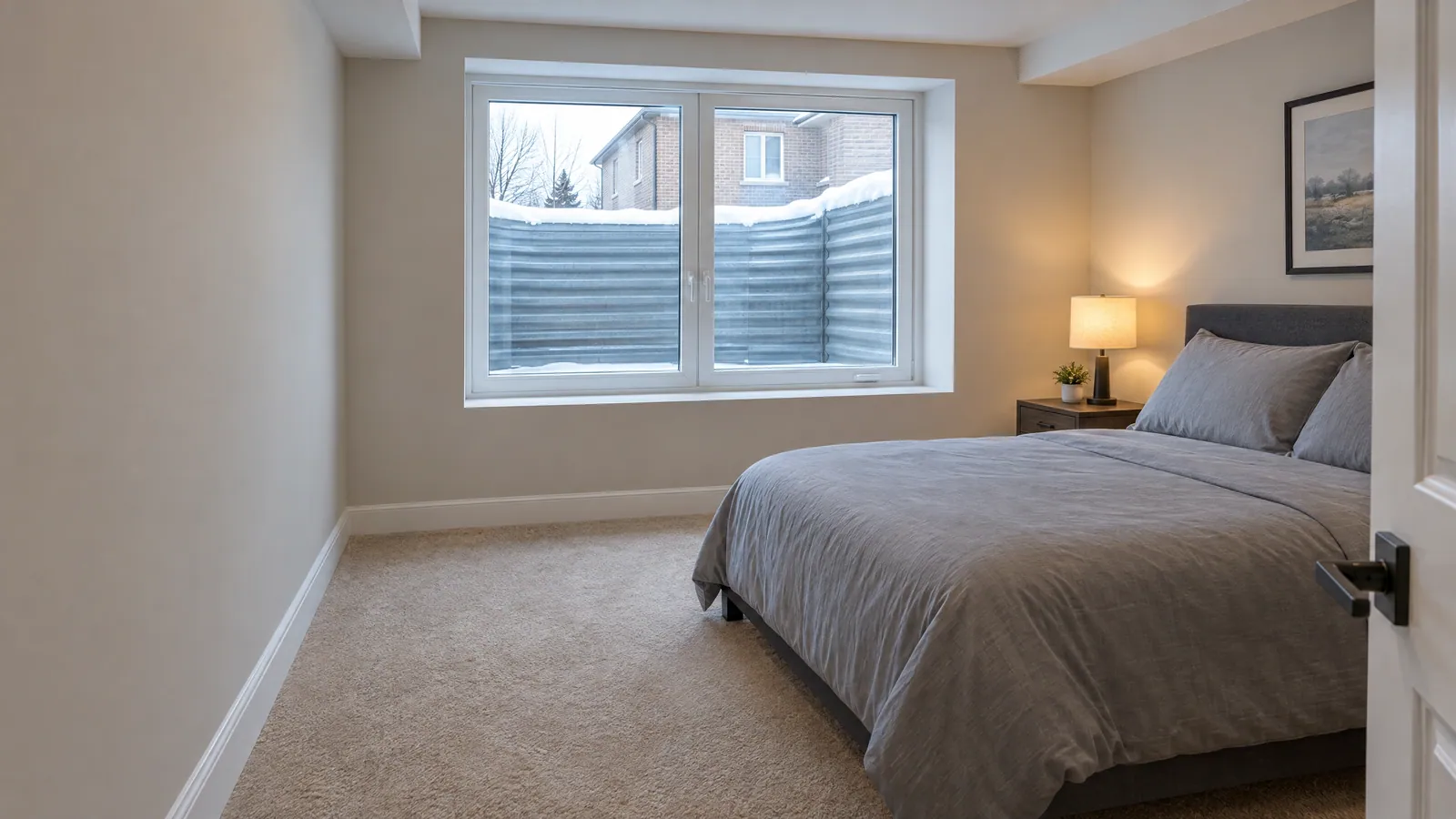
A basement bedroom that needs a bigger window as a way out, or a patio door where a window used to be, means a new opening, a new unit and a City permit. The basement unit guide explains the rules for second-unit bedrooms.
Your house's decade
A house's age is a clue, not a verdict.
| When it was built | What's typical | Where to start |
|---|---|---|
| 1960s and 1970s, such as Bramalea's older sections | Original windows mixed with replacements from a generation ago | The frames. Full replacement comes up most here |
| 1981 to 2005, the busiest building years | Original sealed units old enough to fog; worn cranks, rollers and locks | Parts and glass. The frame is often fine |
| After 2005, in the newer subdivisions | Mostly working windows, the odd fogged unit or stiff slider | Repair, and look for any builder or window-maker warranty paperwork |
Because the early 2000s were the biggest building wave in the census record, many neighbouring houses reach the same stage together.
Two units, one house: weighing both sets of windows
In a two-unit house, the owner may live upstairs with a tenant or relatives below. Look at both floors in one visit.
- Basement windows sit low, so they get splashed, kicked and packed with snow. A stiff or fogged one is usually a hardware or glass job.
- A bedroom window in a registered unit may be that room's required way out. New glass or hardware is fine; making the opening smaller, or switching to a style that opens less, needs a word with the City first.
- Access. Agree a time with whoever lives downstairs. The pro we connect you with should arrive when agreed, keep the work tidy and explain the job to whoever is home.
Rebates, ENERGY STAR and what they cover
Ontario's window rebate rewards replacing whole windows, not repairing them.
- Home Renovation Savings, delivered by Enbridge Gas and Save on Energy, gives money back for each rough opening fitted with an ENERGY STAR certified window or door. For windows it generally expects a home energy assessment and at least two upgrades. Glass swapped into a frame you keep doesn't fit that pattern. Confirm current terms on Save on Energy and homerenovationsavings.ca.
- ENERGY STAR Canada uses one national standard, with no climate zones. Ignore "zone" sales talk.
- No City window rebate. The City's home energy retrofits page points to the provincial program and local energy coaching.
- Heating bills hard to manage? CCET's Energy Retrofit Assistance pilot helps some Peel homeowners, occasionally with select windows and with language help. Places are limited.
A window's energy performance comes from its tested rating, so compare ratings, not promises.
Churchville: where repair comes first by rule
Churchville is Brampton's only designated heritage conservation district. Under its district plan, replacing, removing or changing windows, openings or doors needs a heritage permit, while minor repairs don't. The plan recommends repairing original frames, sash and glass; replacement wooden windows should be made in kind, vinyl and aluminum aren't recommended, and snap-in muntins should be avoided. Storm windows count as heritage features too. Check with the City's heritage section before anything is ordered; the Churchville area page has more.
Getting quotes you can compare
Ask each pro for a written, itemized quote so they describe the same job:
- Scope, window by window: new sealed unit, hardware repair or new window, and whether the old frame stays.
- The product: double or triple pane, and ENERGY STAR certification if you want the rebate.
- What's included: removal, disposal, trim, caulking and any permit.
- The warranty and who stands behind it, plus a completion date.
The City's licensing by-law expects licensed building renovators to give a signed contract with an itemized price, warranties and a completion date, a fair standard to ask of anyone. And once a pro gives you a written estimate, Ontario's Consumer Protection Act caps how much higher the final invoice can go without your agreement.
Still weighing it up? Send a couple of photos: a wide shot of the window and a close shot of the fog or the stuck part. The pro we match you with can often tell from those whether repair will do. Other questions may already be answered in the guides section.
Frequently asked questions
Can a window be fixed if the seal is broken?
Yes, in most cases. The failed part is the sealed unit, and a pro can order a new one made to fit your existing frame. Defogging is another option; it changes how the glass looks without replacing the seal. A whole new window only makes sense if the frame is failing too. Foggy sealed units lays out each route.
Is replacing only the glass cheaper than a new window?
Usually, for one window in a sound frame, because the frame and trim stay put. That shifts when many units fail at once. What moves the price: the glass size and shape, double or triple pane, coatings, how easy the window is to reach, and the frame's condition. Ask for both options in writing.
Do new windows really lower heating bills?
They can, when the old ones leak air or have failed glass, but how much depends on the house. A certified window's performance comes from its tested rating, so compare ratings, not promises. Often the cold comes through a flattened weatherstrip or a failed sealed unit, and fixing that part does much of the good. Ask the pro where the draft actually starts.
Will a rebate cover a sealed-unit replacement?
Not as the program is written. The provincial Home Renovation Savings program counts rough openings fitted with ENERGY STAR certified windows or doors, and for windows it generally wants a home energy assessment plus more than one upgrade. A glass swap in a frame you keep isn't that. Check the current terms on Save on Energy before planning around any rebate.
Our windows are original to a 1990s house. Should we replace them all?
Not automatically. In a 1990s house the frames often have plenty of use left while sealed units, cranks or rollers wear out. Fix what has failed and watch the rest. Consider replacing the lot when the frames crack or leak, most of the glass is fogging, or you want certified windows for the rebate. Replacement windows explains that job.
Is window replacement a good investment?
It is when the windows have actually failed: rot, leaks, drafts through the frame, or glass fogging across the house. The case is weaker when the windows mostly work, because a repair keeps what's sound for much less. Be wary of anyone promising a payback figure for your house.